
End-of-Summer Appliance Health: Don’t Let Small Issues Become Lease-Breakers


TL;DR
- Late summer is a risk point for lease renewals: a failed refrigerator or dryer can tip a tenant toward not renewing. After a hot season of heavy use, small issues such as longer cycles, tiny drips, and higher energy bills can grow into costly repairs if nobody catches them early.
- Watch for lint clogging dryers, air conditioners strained from running nonstop, refrigerator and ice maker supply line leaks in hot kitchens, and cracking hoses on dishwashers, washers, and utility rooms. Each risk pairs with a response: diagnostics for performance drift, alerts and priority tags for triage, task routing for work orders, and leak sensors.
- Before turnover season, check recent appliance alerts, clean or replace filters on PTACs, dryers, and dishwashers, inspect supply hoses, and place leak sensors under sinks and behind ice makers in vacant units. Catching problems early protects renewals and avoids repair costs and tenant complaints.
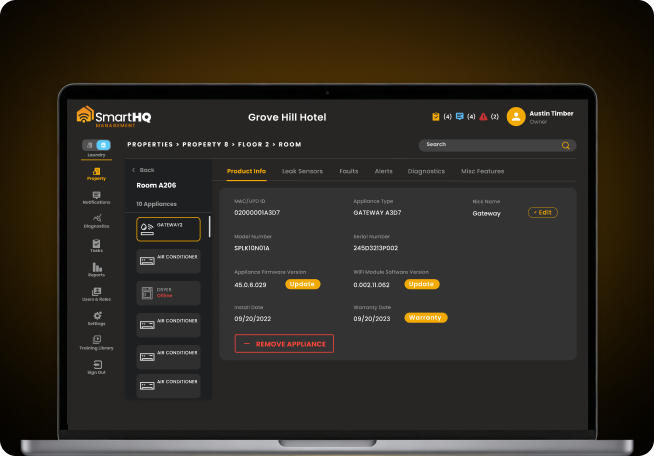
- SmartHQ™ Management helps property teams catch late-summer appliance problems early: connected GE Appliances and PTAC or VTAC units report fault codes over existing Wi-Fi, and alerts can become tasks with an owner, priority, due date, and notes.
Heavy appliance wear and lease renewal decisions arrive together in late summer. A fridge that quits or a dryer that stops venting can be the reason a tenant does not renew. Summer use stresses air conditioners, dryers, and hoses, so small faults can become expensive during move-out and renewal season.
Dryers clog with lint, air conditioners strain from running nonstop, refrigerators and ice makers can leak at the supply line, and hoses on dishwashers and washers can crack. These usually start small: longer cycles, tiny drips, or higher energy bills. Missed early signs let performance drop and repair costs rise.
Combine attention to early signs like longer cycles, drips, and rising energy use with connected monitoring. SmartHQ Management lets connected GE Appliances and PTAC or VTAC units report fault codes over a property's existing Wi-Fi, so teams can act before a resident complains.
Check recent appliance alerts, clean or replace filters in PTACs, dryers, and dishwashers with airflow problems, and inspect supply hoses on units with long fill or drain times. Also walk vacant units and place leak sensors under sinks and behind ice makers.
Leak sensors send instant mobile alerts so a leak is caught early, before it causes mold, damage, and tenant complaints. Place them under sinks and behind ice makers in vacant units, which is a quick way to make sure new tenants move into a protected space.
Still managing your entire appliance fleet without real-time visibility?
- Real-time monitoring and precision diagnostics across your portfolio
- Remote controls and batch commands without room-by-room visits
Portfolio-wide
appliance visibility
Real-time
monitoring & control