
The Multi-Family Spring Cleaning Checklist for Property Managers

TL;DR
- Spring is when multi-family units turn over fastest and cooling demand rises, so preventive maintenance done now avoids summer repairs. With labor at a premium, the goal is fewer breakdowns, and smart appliance software can offset higher repair costs.
- The checklist has five items: evaluate appliance-management software; ask residents to report early signs of equipment failure and share energy-efficiency practices; train staff to run diagnostics and automate off and on at unit turnover; pre-order replacement units and parts; and document appliance details during unit visits for entry into software.
- Smart appliance software monitors refrigerators, ovens, dishwashers, and washers and dryers, and sends alerts so a landlord can schedule service before an emergency call. Keep parts on hand because of supply chain delays and labor shortages: stocking replacements speeds recovery when equipment fails.
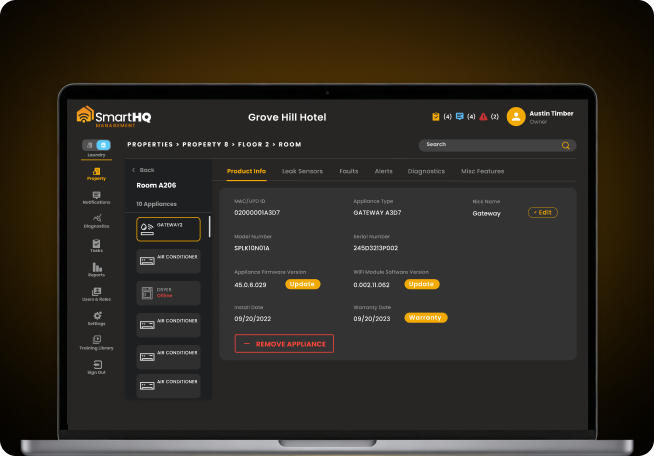
- SmartHQ™ Management helps property teams monitor connected appliances across a portfolio, run remote controls and batch commands without room-by-room visits, and turn alerts into tasks with an owner, priority, due date, and notes.
Multi-Family property managers need to stay on top of those preventive-maintenance tasks for which their residents are not responsible, especially during Spring cleaning season. Temperatures are rising, and units are turning over at the fastest rate of the year.
Putting in the Spring maintenance to avoid as much Summer repair as possible is nothing new; it’s the seasonal routine. However, there are a couple newer developments that suggest changes for the better in preventative maintenance for multi-family properties.
Labor is at a premium, so it’s even more critical to avoid break-downs and repairs of your appliances, but technology is advancing as an offset against the higher costs of repairs.
Now is a great time to look at preventive-maintenance best practices that will pay off for years instead of just the coming Summer.
The New Trend of Preventive-Maintenance for Landlords is the Use of Smart Appliance Software to Reduce the Time and Costs of Repair Labor.
Tenant-focused landlords are now turning to smart appliance software to reduce the time and costs of preventive maintenance. This is a new trend that is gaining momentum in the industry as it provides landlords with a way to optimize their operations and save on costs.

Smart appliance software allows landlords to remotely monitor appliances, such as refrigerators, ovens, dishwashers, and washers/dryers. It can send alerts when there is a problem that needs attention. The landlord can then schedule service appointments and have professionals come out right away when needed. This prevents the need for emergency calls which are costly and many times unplanned.
1. Evaluate Appliance-Management Software That Takes Preventative-Maintenance to a New Level
With each season, new capabilities in appliance management software emerge to better support property managers in their daily and seasonal routines. Be sure to revisit platforms and solutions that can deliver more time back in your schedule - especially in these hectic spring and summer turnover months. Enhancements to smart appliance software - even since last summer - will eliminate the time and cost of surprise appliance breakdowns by predicting and scheduling maintenance and replacements.
2. Communicate Energy-Efficiency Best Practices to Your Residents, and Ask Them to Be Your Eyes and Ears for Early Signs of Equipment Failure
Your residents see and operate your equipment every day. They are the first line of defense in avoiding costly repairs or replacements. The periodic phone call, text, or pop-by to see how the units’ equipment is performing is a sure-fire tactic to staying on top of repairs before they become replacements. Be sure your contact lists are up to date, provide small rewards for prompt response, and communicate energy-efficiency best practices; i.e.., target cooling temperature settings; and increase awareness with your residents of warning signs that equipment is starting to fail.
3. Train Staff on Use of Appliance-Management Software to Run Diagnostics and Automate Off/On During Turn-Over of Units.
Hosting a seasonal training session on your chosen appliance management software - a guided tour of features, basic functionality, and diagnostic tools - can give you hours in return during the spring cleaning season to attend to other priorities. You’ve trained your team to handle the appliance management basics. They’ll have a more complete picture of each units’ equipment status - in real time. Along with their regular maintenance checklists and unit inspections, they’ll have a more complete understanding of the repairs needed for each property.
4. Pre-Order Replacement Units and Parts to Avoid the Excessive Time, Cost and Resident Disruption of Today’s Supply Chain Delays and Labor Shortages
Warehousing your inventory of replacement parts and appliances may already be your standard practice, but with supply chain delays affecting nearly every manufacturer and industry as of late, it’s now essential that you build up your replacement parts inventory. Having those parts on hand and on site will ensure faster recovery times during an equipment repair.
5. Use the Unit Visits to Document All Appliance Details, for Input Into an Appliance Management Software System
Fortunately, a solution like SmartHQ Pro is cloud-based and can be integrated into any property-management software, with any brands of appliances; so no matter what appliances you have in place, be prepared to add them to a software solution like SmartHQ which can not only schedule preventive maintenance, but enable remote monitoring and control. This capability is especially valuable to multi-family property managers seeking to avoid as many physical visits as possible, and avoid as many unpredictable repairs as possible.
Five items: evaluate appliance-management software, ask residents to watch for early failure signs, train staff on the software, pre-order replacement units and parts, and document appliance details during unit visits. These are spring habits that pay off beyond the coming summer, especially with labor at a premium.
Temperatures rise and units turn over at the fastest rate of the year. Spring maintenance avoids as much summer repair as possible, and the routine is more critical now because labor is at a premium. Advancing technology, such as smart appliance software, can also offset higher repair costs.
Residents see and operate the equipment daily, so they are the first line of defense. Landlords can ask them to watch for warning signs of failure and share energy-efficiency practices such as target cooling temperatures. Keeping contact lists current and offering small rewards for prompt responses helps too.
Supply chain delays make waiting for parts costly. Delays affect nearly every manufacturer, so a parts inventory kept on site means faster recovery during an equipment repair, with less time, cost, and resident disruption. Pre-ordering replacement units and parts helps too.
Staff benefit from a seasonal training session covering features, basic functionality, and diagnostic tools. Trained teams can run diagnostics and automate off and on during unit turnover, and they see each unit's equipment status in real time. That can return hours during spring cleaning season.
Still managing your entire appliance fleet without real-time visibility?
- Real-time monitoring and precision diagnostics across your portfolio
- Remote controls and batch commands without room-by-room visits
Portfolio-wide
appliance visibility
Real-time
monitoring & control