Property monitoring splits into seven separate jobs: work orders, unit condition, appliance and equipment condition, water, energy and lifecycle, preventive maintenance, and access. Most teams end up running three or four tools to cover them.
Repairs rarely bankrupt a budget. The gap between something going wrong and someone finding out does, through emergency truck rolls, water damage that had time to spread, and units sitting vacant longer because nobody knew their actual condition.
AppFolio keeps leasing, rent, and maintenance history in one operational record. HappyCo backs every inspection and turns with time-stamped photos and signatures. Enertiv builds the multi-year consumption and equipment-age picture a capital plan needs.
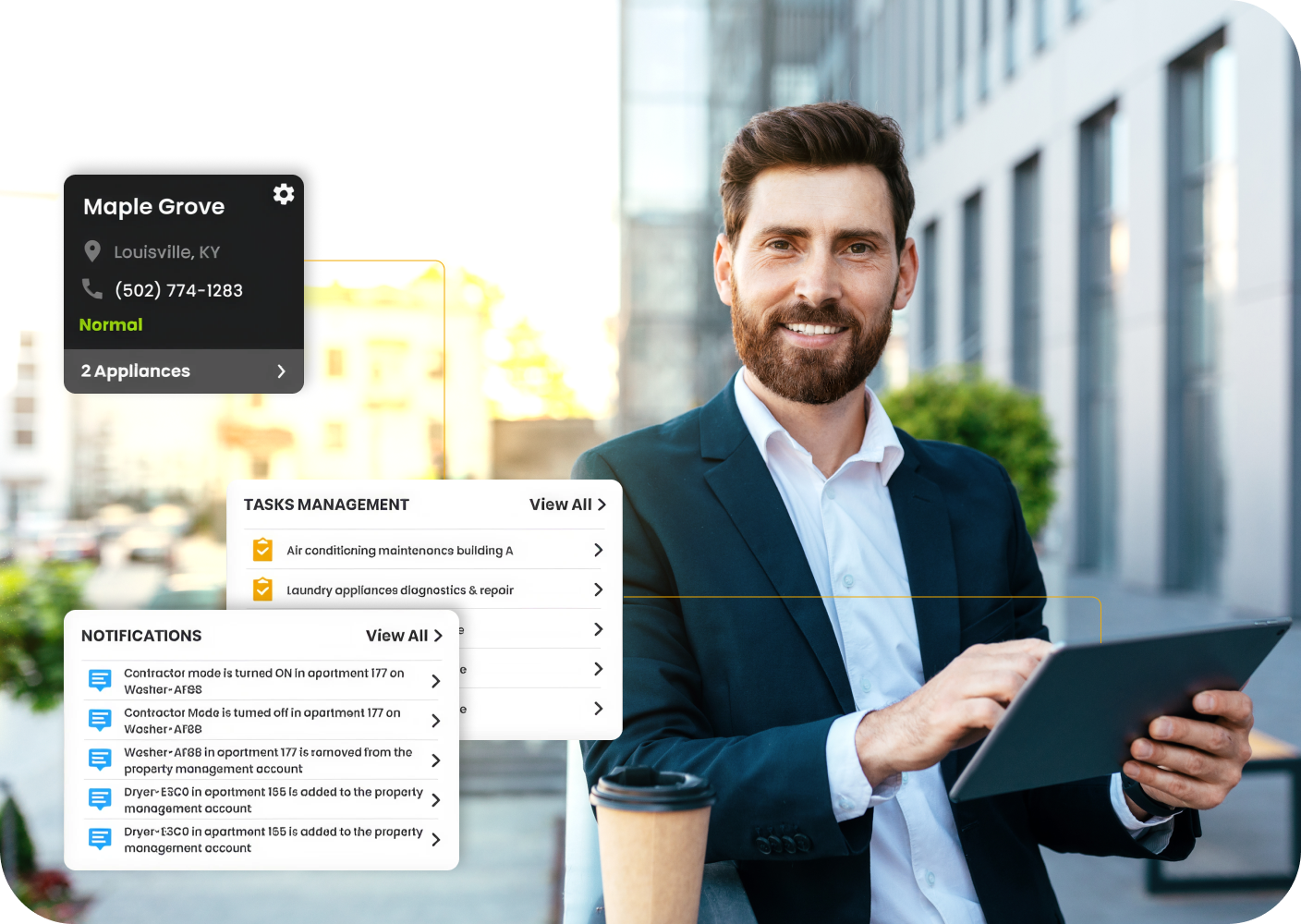
SmartHQ™ Management reads what a connected GE Appliance is already reporting and routes it to whoever's responsible. A leak or a fault reaches your team as a scoped task, not a guest complaint.
Yardi Voyager, SmartRent, PointCentral, Alert Labs, UpKeep, and ButterflyMX round out the list, each covering one narrower job: enterprise accounting, water risk, or the front door.
A property manager can only be in one place at a time. Everything else, every unit, every mechanical room, every leak sensor, isEverything else, from individual units and mechanical rooms to leak sensors, is running unsupervised unless something reports back.
With property monitoring, what's already happening across a portfolio becomes visible and actionable, rather than something a resident has to call in.
The problem is that the category covers a lot of ground under one name. Work order platforms, leak sensors, energy dashboards, and video intercoms all fall under "monitoring," and each one watches a completely different part of the building. Buy the wrong one, or buy too many of the same kind, and you're still missing whatever layer nobody's watching.
This guide covers 10 services by the one job each does, so you can match a service to an existing gap in your portfolio.
The 7 Jobs a Property Monitoring Stack Has to Cover
A property team may use one system for work orders, another for inspections, and separate tools for leak detection, energy monitoring, or building access. These are different operational jobs, but they all answer the same question: what is happening across the property right now?
Here are the seven jobs a property monitoring stack needs to cover:
Work order activity: Request intake, assignment, status, and the record of what was fixed in which unit.
Unit condition: Move-in, move-out, and periodic inspections with photo evidence, plus how far along each make-ready has progressed.
Appliance and equipment condition: Fault codes, leak sensor state, firmware currency, and energy draw, reported by the machines themselves rather than by residents.
Water: Flow rates, leak detection, unusual consumption, and automatic shutoff where a valve is installed.
Energy and equipment lifecycle: Consumption patterns and equipment age, which together tell you when replacement makes more sense than another repair.
Preventive maintenance: Recurring servicing, filter changes, and warranty tracking against specific assets.
Access and perimeter: Entry, visitor and vendor credentials, package delivery, and movement through common areas.
Your core platform likely covers two or three of these well. The rest tend to live in spreadsheets, shared inboxes, or the memory of whoever has been there longest.
Key Insight: Monitoring is two jobs sharing one name. A work order system reports what a resident told you. An equipment monitoring system reports what the appliance detected, often days before anyone in the unit notices. Treating one as a substitute for the other is the mistake that shows up most often in a property stack.
How We Selected These 10 Services
We built the list from platforms appearing in current property software rankings, then added specialist monitoring tools that cover what those platforms leave open. Four criteria decided what made it in:
Job clarity: Each service appears against the single job it owns. Where a platform spans several, we describe its strongest one, since that is the job you would buy it to do.
Detection vs. routing: A service that notifies you is a different purchase from one that turns a detected condition into assigned work. Each section says which it does.
Connectivity model: Wi-Fi, cellular, in-unit hub, and independent radio deployments each carry their own prerequisites. The model your building suits decides whether rollout takes a week or a quarter.
Field usability: Adoption among your on-site maintenance and inspection staff decides whether the licence fee pays for itself, so mobile behaviour carried real weight.
Sources used
Vendor pricing pages and official product documentation, pulled in August 2026
Published pricing tiers and monthly minimums, with quote-based tiers identified as such
Job coverage assessed against the seven monitoring jobs above
US multifamily deployment as the reference case
The 4 Services Doing the Most Work in a 2026 Stack
Four services cover the four jobs that get expensive fastest when they live in a spreadsheet:
AppFolio holds your operational record. Work orders, leasing, and maintenance history sit against the unit, and the mobile build is strong enough that leasing and maintenance staff both use it daily.
SmartHQ™ Management monitors continuously. Fault codes surface in real time across every connected GE Appliance in the portfolio, and with GE leak sensors installed, leak alerts do too. Your team sees the problem on the dashboard, creates a task, and assigns it before a resident ever calls.
HappyCo documents your units. Inspections and turns carry time-stamped photos and signatures, which is what settles a deposit dispute six months later.
Enertiv watches your equipment across years rather than days. Consumption data and equipment age feed the capital plan and any sustainability reporting you owe investors.
The remaining six offer either a different route to the core record or a specialist layer beside it:
Yardi Voyager for accounting depth across mixed asset types
SmartRent for in-unit devices and credential-based access
PointCentral for smart home paired with automatic water shutoff
Alert Labs for water monitoring where building coverage is weak
UpKeep for preventive scheduling on mechanical equipment
ButterflyMX for entry, visitors, and package delivery
10 Property Monitoring Services at a Glance
Here is the full list in one view, with the job each service owns and the point where its scope ends.
10 property monitoring services by the job each one handles
Service
Best for
Standout capability
Pricing
Where it stops
AppFolio
Mid to large residential portfolios above 50 units
Realm-X handles maintenance intake and surfaces work orders on request
Quote-based across Core, Plus, and Max
Watches the request rather than the equipment behind it
SmartHQ™ Management
Operators running connected GE Appliances and Zoneline PTAC or VTAC systems
Advanced Diagnostics shows which fault is recurring across a whole account, and how often
Quoted per deal
Covers connected, Wi-Fi-enabled GE Appliances
Yardi Voyager
Institutional portfolios spanning residential and commercial assets
Facilities management sits in the same database as the general ledger
Quoted per deal
Implementation runs as a project rather than a purchase
HappyCo
Multifamily teams above 500 units with inspection or turn bottlenecks
Maintenance app combines inspections and turn tasks in one offline-capable field tool
Per unit per month, quoted, 500-unit minimum
A 500-unit floor sets the entry point
Enertiv
Owners who need data behind an equipment replacement decision
On-site survey produces an asset-tagged digital inventory of every asset
Quoted after survey
Services-heavy rollout with a longer runway
SmartRent
Communities standardizing in-unit devices and credential-based access
Credential automation revokes resident access at move-out, so rekeying stops
Quoted per community after site survey
An in-unit hub per apartment carries hardware and labour cost
PointCentral
Portfolios where water damage is the headline risk
Leak sensors paired with smart valves, so a leak triggers a shutoff
Quoted per unit
Watches devices it installed rather than existing appliances
Alert Labs
Buildings where water risk sits where coverage is weakest
Battery sensors on a network independent of building communications
Quoted by sensor count
Single-purpose water coverage
UpKeep
Portfolios with significant mechanical and common-area equipment
Preventive schedules run against individual assets with downtime history
Essential $24/user/mo and Premium $55/user/mo; Professional and Enterprise quoted
Built for facilities work rather than resident-facing operations
ButterflyMX
Properties modernizing front-door and package operations
Cloud video intercom with retrofit-friendly installation
Hardware plus subscription, quoted per property
Covers the entry layer alone
Pricing reflects August 2026 data. Since review counts change weekly, re-check each dashboard before publishing.
1. AppFolio: Best for Portfolio-Wide Work Order Visibility
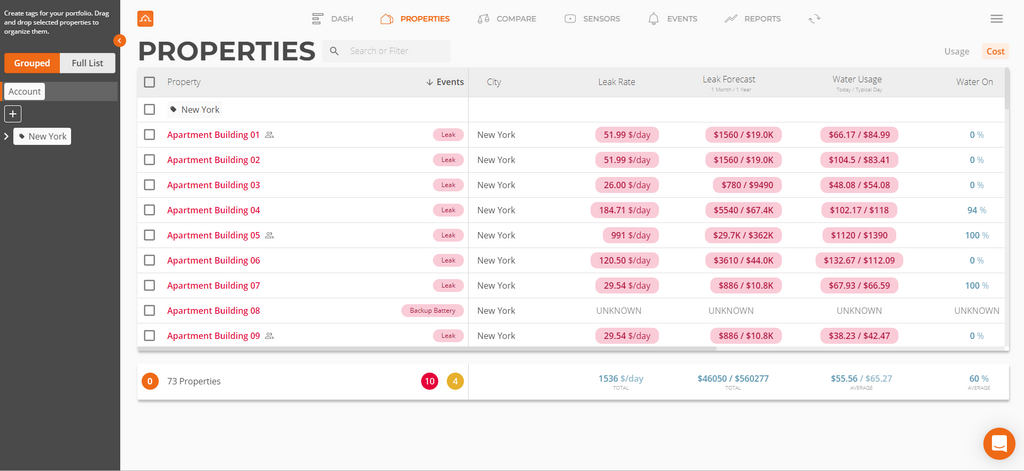
AppFolio dashboard
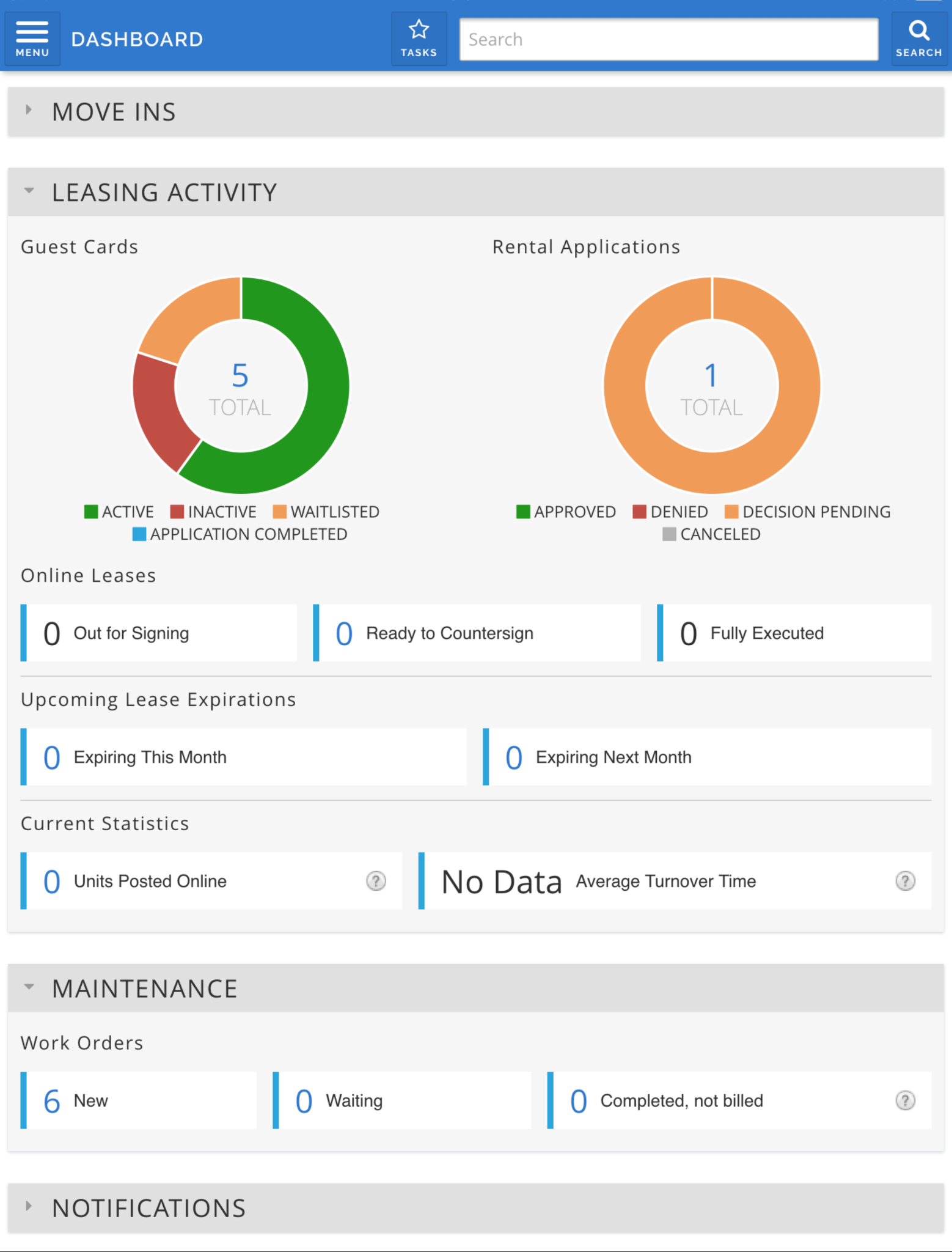
AppFolio suits you if your portfolio runs above 50 units and you want leasing, rent, and maintenance history living in one database. Requests arrive through the resident app and land in the work order queue without anyone retyping them, and the history stays attached to the unit permanently.
Recent development has focused on an AI layer reading the same data. It handles maintenance intake and answers questions about work orders, which saves your team building an export every time somebody asks how the month went.
Where it stops is at the equipment. AppFolio records that a repair was requested and who took it. Whether the compressor threw the same fault three times last quarter sits outside what it can see, because nothing in the building reports to it.
What you can do with AppFolio
Handle intake around the clock: Realm-X Maintenance Performer responds to maintenance requests outside office hours
Route requests without retyping: Resident submissions arrive directly in the work order queue
Keep unit history in one place: Lease, resident, and maintenance records stay attached to the unit
Work from the field: Mobile apps built for leasing agents and maintenance staff rather than desktop users
AppFolio Pros and Cons
Pros
Cons
Watch for
Your owners pull reports, inspections, documents, and 1099s from the portal themselves, which saves your team a monthly export
Equipment condition and high-volume work order coordination both hand off to specialist tools further down this list
Transaction fees apply to online payments. AppFolio doesn't publish a public rate card, so confirm current rates with your account team before you set the budget
Pricing: Quote-based across Core, Plus, and Max. Core carries a 50-unit minimum.
2. SmartHQ™ Management: Best for Appliance and HVAC Condition
SmartHQ Pro Management Homepage
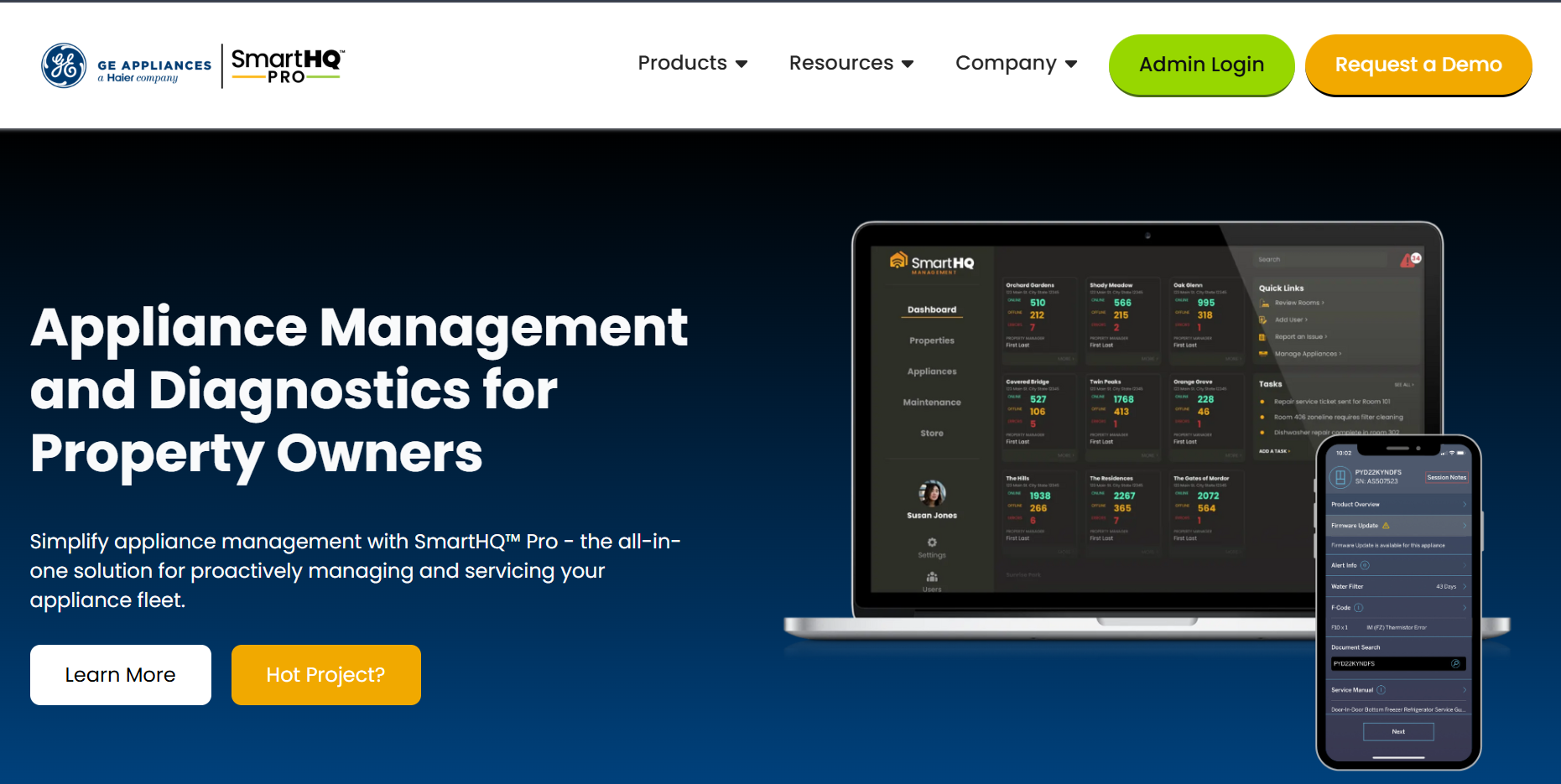
SmartHQ™ Management is ideal if your properties run Wi-Fi-enabled GE Appliances, including Zoneline PTAC and VTAC systems, and you want to hear about a problem from your dashboard rather than from a guest. Leak sensor state, fault codes, firmware status, and energy consumption all report into one view covering every property in your account.
That changes the shape of a repair. A fault becomes a task you assign to a named person, scoped down to the exact room, with a due date attached. Where the job needs a professional, a Bodewell connection lets you schedule appliance service straight from the alert.
The approach differs from the device platforms further down this list. Rather than installing a separate layer of monitoring hardware, you read what the appliances you already own are reporting about themselves, leak protection being the exception, since that pairs with GE leak sensors. It works over your existing property Wi-Fi, though your IT team will want to confirm the network is a fit first.
Hotels, extended-stay, student housing, senior living, and multifamily operators all use it, whether the focus is HVAC or the wider appliance mix.
What you can do with SmartHQ™ Management
See which fault keeps coming back: Advanced Diagnostics gives you the fault definition, total count, affected appliance count, and last event date across a property or your whole account, exportable to a spreadsheet.
Catch water early: Paired GE leak sensors and gateways trigger app and email alerts the moment moisture reaches a sensor.
Turn an alert into assigned work: Create a task scoped to property, building, floor, and room, with an owner, a priority, and a due date.
Change settings across a fleet in one step: Batch Command applies firmware updates, power controls, mode settings, and temperature limits without visiting rooms.
Hold energy use inside a range: Temperature limiting, SmartFan modes, and occupancy-based make-up air adjust remotely across units.
Keep asset records current: Model numbers, serials, nicknames, and locations sit alongside manuals, warranty information, and update history for every appliance.
Match access to the job: Role-based permissions give owners, managers, and technicians their own view of the same portfolio.
Bring new staff up quickly: A built-in Training Library walks your team through setup and daily use.
Work from anywhere: Full features run in a browser, with an iOS or Android app used for commissioning appliances on site.
Table 3: SmartHQ™ Management Pros and Cons
Pros
Cons
Watch for
Advanced Diagnostics tells you which fault is recurring, on how many appliances, and when it last happened, which is the input your preventive maintenance schedule actually needs
Coverage applies to connected, Wi-Fi-enabled GE Appliances. Leases, rent collection, and owner accounting stay in your core platform. Leak protection requires GE sensor and gateway hardware
Network prerequisites decide whether deployment succeeds, so get IT sign-off before you buy. You will need 2.4 GHz Wi-Fi reaching at least -85 dB at appliance locations, IPv4 addressing, and WPA or WPA2-PSK security. Your firewall has to pass persistent TCP, outbound HTTPS, and MQTT traffic. Data use runs around 30 MB per device per month. WPA3-only networks, WPA2-Enterprise authentication, captive portals lacking a bypass, and weak in-room Wi-Fi each block the connection
3. Yardi Voyager: Best for Enterprise Portfolios with Complex Accounting
Yardi Voyager dashboard
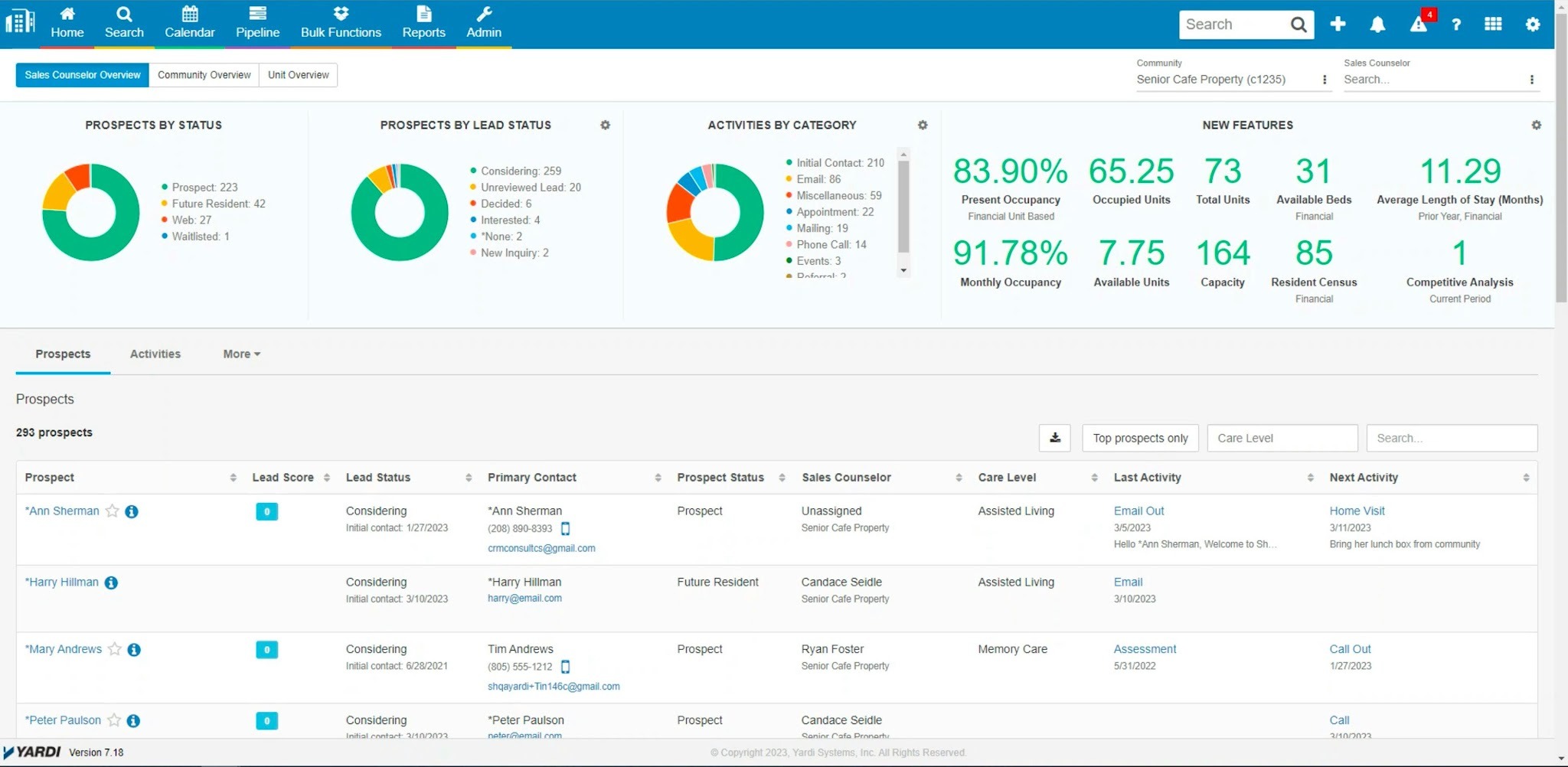
Yardi Voyager works if you run residential alongside commercial or affordable assets and your accounting requirements drive the decision. Facilities management sits inside the same platform as your general ledger, which for an owner reporting to investors usually settles the question by itself.
In monitoring terms it belongs in the same layer as AppFolio. It watches recorded activity across a larger and more varied portfolio, so mixed-use operators work from one database instead of three.
What you can do with Yardi Voyager
Run maintenance beside the ledger: Work orders and facilities management share a database with leasing and accounting
Hold several asset types together: Residential, commercial, affordable, and mixed-use properties operate in one platform
Report at portfolio level: Reporting depth aims at asset managers and institutional stakeholders
Work from any device: Browser-based access removes the local install
Yardi Voyager Pros and Cons
Pros
Cons
Watch for
One database across residential, commercial, and affordable assets, which saves the manual reconciliation mixed-use operators otherwise run every month
Like everything in this layer, it watches recorded activity while equipment behaviour stays outside its view
Implementation runs across months with configuration resources assumed, and Yardi positions Breeze separately for smaller portfolios
Pricing: Quoted per deal, based on portfolio size and modules.
4. HappyCo: Best for Inspections and Make-Ready Turns
HappyCo mobile inspection
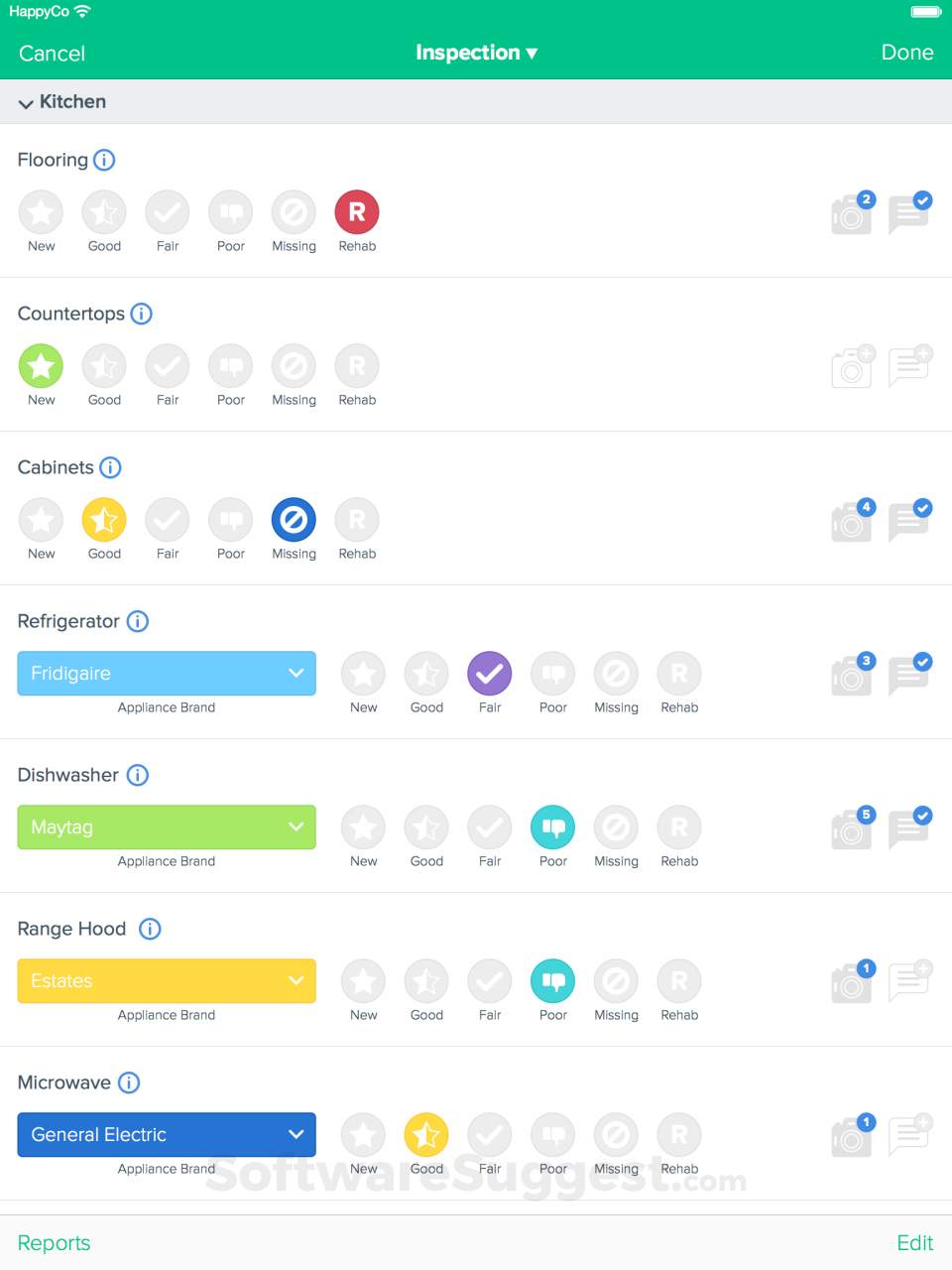
If you clear 500 units and your bottleneck is inspection consistency or turn time, HappyCo is a suitable option. It documents unit conditions across the resident lifecycle, covering move-in, move-out, periodic inspections, and the due diligence walks that happen when a property changes hands.
Time-stamped photos and digital signatures attach to each record. That evidence trail is what holds up in a deposit dispute, and what an asset manager asks for during an acquisition. Development since has pushed past inspections into the operations around them, so work orders and make-readies now run in the same system.
What you can do with HappyCo
Inspect from a phone: One iOS and Android app carries required photos, comments, and offline capture for weak-signal buildings
Standardize what gets recorded: Configurable templates set required photos and resident signatures per inspection type
Watch turn progress centrally: A make-ready board holds each project alongside its tasks and inspections
Inspect remotely: Live Inspections lets an off-site inspector join while your on-site operator supplies the video feed
Trigger leasing automatically: Vacant-unit readiness pushes into leasing workflow once the turn completes
HappyCo Pros and Cons
Pros
Cons
Watch for
Photo-backed condition records give you what you need for deposit disputes and asset condition reporting
Accounting and leasing hand off to your core platform, and equipment condition sits outside it entirely
A 500-unit minimum applies, which puts HappyCo beyond smaller portfolios regardless of fit
Pricing: Per unit per month, quoted, with a 500-unit minimum. Enterprise pricing applies above that.
5. Enertiv: Best for Equipment-Level Energy and Capital Planning
Enertiv equipment inventory dashboard
Enertiv sits in the same layer as SmartHQ™ Management while answering a different question. Fault monitoring tells you what needs fixing this week. Enertiv builds the multi-year view.
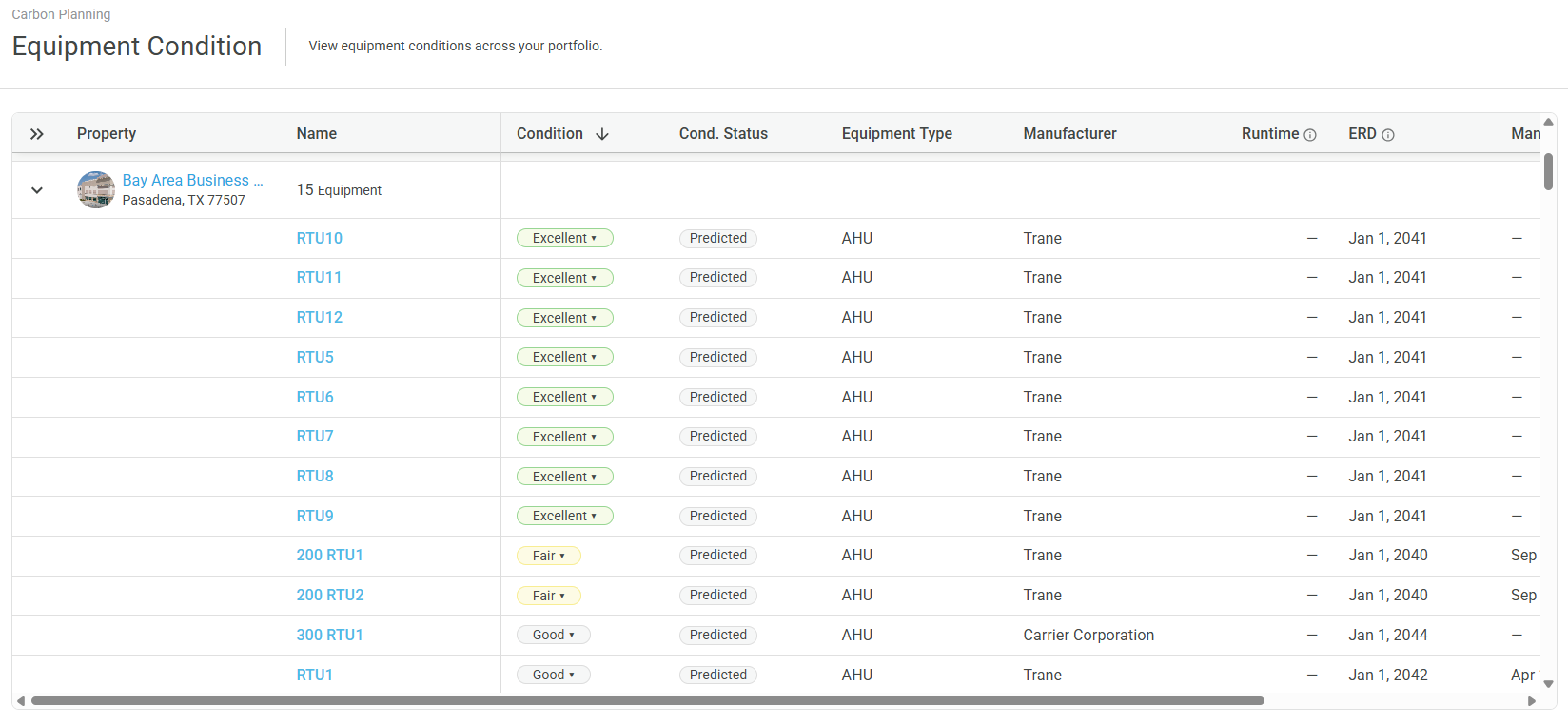
An on-site survey creates a digitized cloud inventory of your building equipment and in-unit appliances, tagged with nameplate data, images, and locations. Consumption patterns and equipment age then feed both capital planning and any sustainability reporting you owe.
However, Enertiv deploys dedicated cellular networks for its installations, so building Wi-Fi and IT involvement stay out of the equation. If your in-building coverage is weak or your network policies are restrictive, that removes an obstacle Wi-Fi-dependent platforms have to work around, though it means installing a separate sensor and connectivity layer rather than reading equipment you already own.
What you can do with Enertiv
Inventory what you own: An on-site survey produces asset-tagged records carrying photos, equipment details, and location
Catch anomalies on critical systems: Real-time monitoring covers equipment such as boilers and ventilation
Act before failure: Predictive alerting flags equipment drifting outside its learned pattern
Bill tenants accurately: Submetering captures consumption and automates the billing behind it
Report to standard: Whole-building utility data exports in Energy Star and GRESB-ready format
Enertiv Pros and Cons
Pros
Cons
Watch for
Dedicated cellular deployment frees you from the building Wi-Fi and IT dependency that constrains most connected platforms
A services-heavy rollout means on-site surveys and hardware installation, so the runway runs longer than software-only tools
Reporting leans institutional, so a 200-unit operator without ESG obligations buys more platform than the problem calls for
Pricing: Quoted after survey.
6. SmartRent: Best for In-Unit Smart Devices and Access
SmartRent smart apartment device view
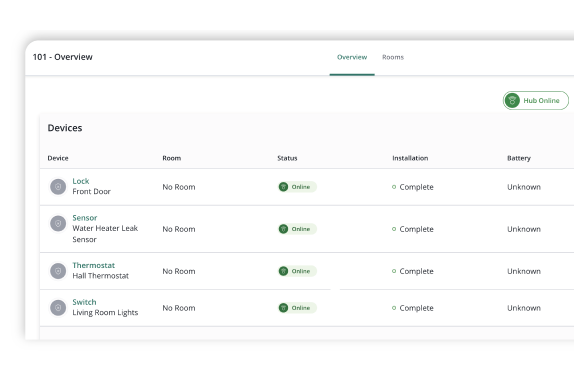
SmartRent manages connected hardware and physical access across communities, covering smart locks, thermostats, lighting, sensors, and the self-guided tour setup that lets a prospect walk a unit alone.
Move-in issues credentials and move-out revokes them, so your turn stops involving a locksmith. Since this is hardware, the buying process differs from software on this list. A site survey comes before a quote, and installing across an occupied property runs as a scheduled project.
What you can do with SmartRent
Issue access in several formats: Mobile, PIN, card, and fob credentials cover residents, staff, and vendors
Control the unit from one dashboard: Locks, hubs, thermostats, lighting, and plugs report into a single view
Run tours without staff: Self-guided touring uses automated ID verification and geofenced access codes
Retire rekeying: Credentials issue at move-in and revoke at move-out automatically
Hold vacant units efficiently: Thermostat schedules for unoccupied units adjust remotely
SmartRent Pros and Cons
Pros
Cons
Watch for
Physical access and in-unit device control run from one dashboard, and the rekeying line disappears from your turn cost
An in-unit hub means hardware and installation labour in every apartment, which lands as capital expenditure per door
Coverage extends to devices SmartRent installed, so the appliances already in your units still need their own layer
Pricing: Quoted per community after an on-site survey.
7. PointCentral: Best for Smart Home with Automatic Water Shutoff
PointCentral dashboard
Part of Alarm.com, PointCentral differentiates on the water layer. Wireless leak sensors work alongside smart valves, so a detected leak triggers a shutoff rather than sitting in a notification queue at 2 am.
In a multi-story building where one plumbing failure reaches every floor below it, that difference carries the entire business case. A broader smart home offering sits around the water layer, which makes PointCentral a genuine alternative to SmartRent where water outranks turnover as your concern.
What you can do with PointCentral
Stop a leak automatically: Wireless sensors pair to smart valves for shutoff without a call-out
Track consumption: A smart water meter surfaces inefficiency at property level
Manage entry: Smart locks and credentials cover units and common areas
Hold temperature portfolio-wide: Thermostat management extends to vacant unit scheduling
Tour without an app: Access codes arrive by text
PointCentral Pros and Cons
Pros
Cons
Watch for
Detection paired with action means a leak triggers a valve shutoff while everyone is asleep, which is where the claims exposure actually sits
Coverage runs broad across smart home rather than deep into diagnostics on the appliances already installed
Per-unit hardware carries the same capital and installation profile as other device platforms, so budget it as a project
Pricing: Quoted per unit.
8. Alert Labs: Best for Water Monitoring in Low-Coverage Spaces
Alert Labs dashboard
Alert Labs suits you if your highest water risk sits in basements and mechanical rooms where building Wi-Fi barely reaches. It handles one job thoroughly. Battery-operated leak detectors and flow sensors run on their own cellular network instead of your building's Wi-Fi, which solves the coverage problem that defeats Wi-Fi-dependent sensors in exactly the places water tends to appear.
Unusual-usage alerting sits alongside leak detection and often justifies the purchase on its own, since it explains a water bill your team has been arguing about for months.
What you can do with Alert Labs
Deploy where power is scarce: Battery-operated detectors install without wiring
Watch consumption as well as leaks: Flow sensors surface unusual usage at building and unit level
Skip the IT conversation: Sensors connect over a dedicated cellular network instead of building Wi-Fi
Scale across a portfolio: One platform covers thousands of units and buildings
Document risk for insurers: Monitoring history supports water risk reporting
Alert Labs Pros and Cons
Pros
Cons
Watch for
Works in basements, mechanical rooms, and crawl spaces where Wi-Fi-dependent sensors go quiet
Single-purpose coverage, so HVAC, appliances, work orders, and access all sit elsewhere
Detection and alerting are where it ends, so response coordination lives in whichever system your team already opens each morning
Pricing: Quoted by sensor count and portfolio size.
9. UpKeep: Best for Preventive Maintenance on Building Equipment
UpKeep preventive maintenance schedule or asset record
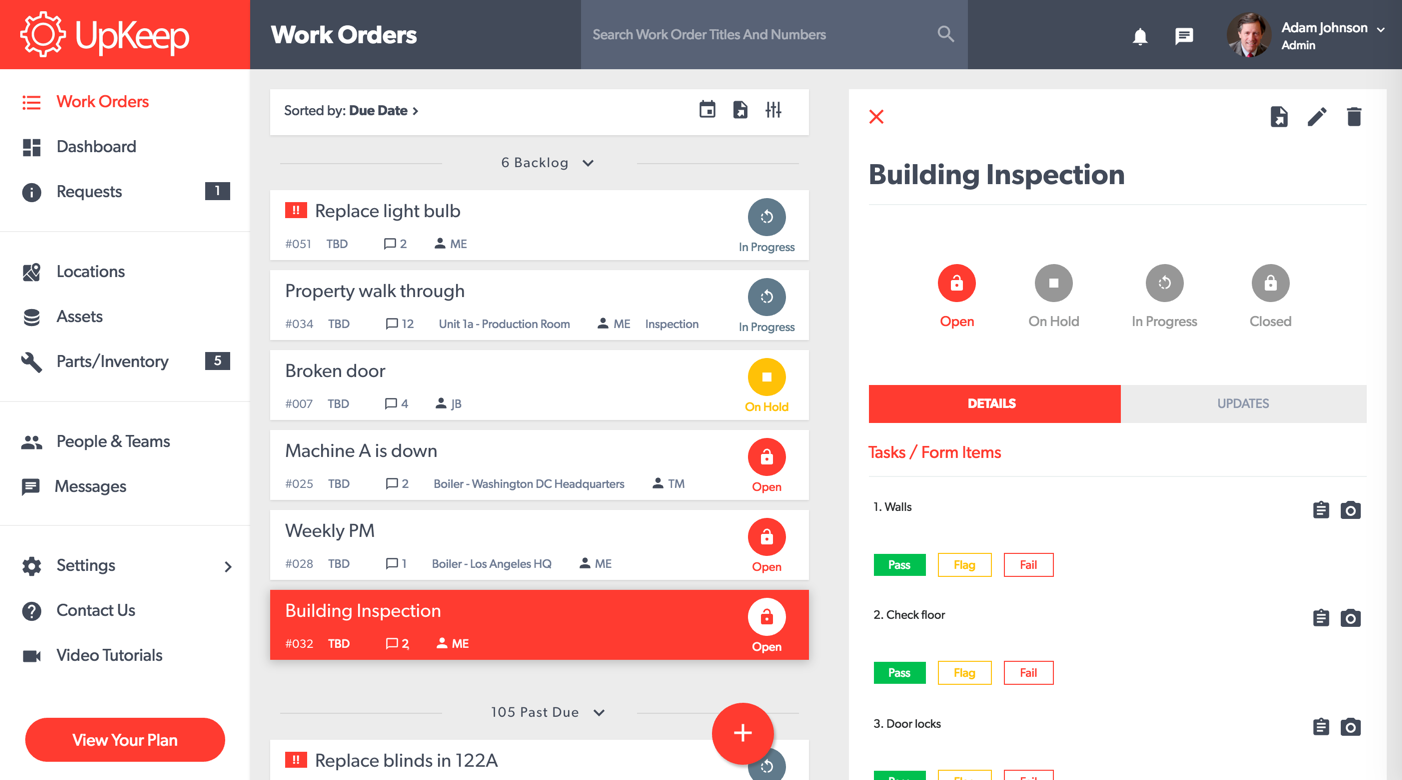
UpKeep is a good fit if your portfolio carries significant mechanical and common-area equipment needing scheduled servicing. It is a Computerized Maintenance Management System (CMMS) rather than a property platform, which makes it a better fit for boilers, pumps, and generators than for resident-facing workflows.
Where your maintenance runs on a calendar and attaches to specific assets, this is the shape of the tool that matches. It sits alongside your core platform rather than replacing it.
What you can do with UpKeep
Schedule against the asset: Recurring work attaches to individual pieces of equipment
Track downtime history: Service records and failure history build per asset over time
Dispatch to phones: A technician-facing app carries photo and note capture
Manage parts: Stock levels track against consumption
Document for audits: Servicing history exports for compliance inspections
UpKeep Pros and Cons
Pros
Cons
Watch for
Asset-level preventive scheduling with downtime history, which most property platforms handle only as a recurring reminder
Built for facilities work, so resident workflows, leasing, and unit turns sit outside it
Per-user rather than per-unit pricing changes the maths for teams carrying many occasional users
Pricing: Per-user tiers. Essential ($24/user/month) and Premium ($55/user/month); Professional and Enterprise are custom quotes.
10. ButterflyMX: Best for Entry and Visitor Monitoring
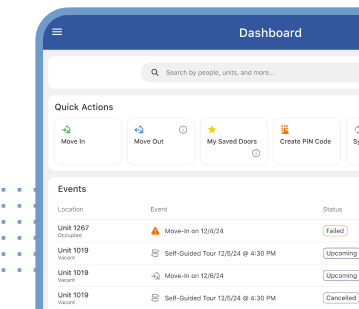
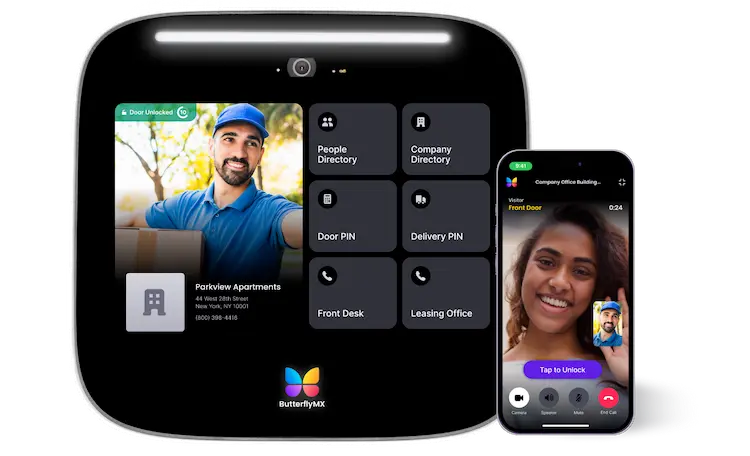
ButterflyMX entry panel and resident mobile video call view
Built on cloud video intercoms, ButterflyMX has become one of the most recognizable names in multifamily visitor entry, and it watches a layer nothing else on this list touches.
Retrofit-friendly installation is the practical advantage in most buildings. Replacing an intercom in an occupied building usually turns into a wiring project; ButterflyMX avoids that in most cases, though buildings with unusable existing wiring may still need a full rewire.
What you can do with ButterflyMX
Answer the door from anywhere: Video calls route from the entry panel to resident phones
Give couriers time-limited access: Visitor and delivery credentials expire automatically
Release the door from a phone: Resident mobile entry replaces the fob
Keep a video record: Entry logs carry time-stamped photos attached
Install without rewiring: Retrofit design suits occupied buildings
ButterflyMX Pros and Cons
Pros
Cons
Watch for
Entry and package monitoring with a video record, covering a layer your maintenance and equipment tools leave open
Scope ends at the entry layer, so maintenance, equipment, and unit condition stay elsewhere
Hardware plus subscription puts a per-door capital component alongside the recurring fee
Pricing: Hardware plus subscription, quoted per property.
Did You Know? Preventive maintenance schedules work best when equipment data feeds them. A calendar interval tells you a filter comes due in March. Equipment data tells you which units threw the same fault three times last quarter, which turns a generic schedule into a targeted one.
How to Build Your Monitoring Stack Without Overbuying
10 services rarely means 10 subscriptions, and most portfolios settle at three or four. Four steps get you to the right number:
Step #1: Start with your core record
List the seven monitoring jobs and mark the ones your current platform handles to a standard your team accepts without workarounds. What stays unmarked becomes your candidate list, and it usually runs shorter than a vendor demo suggests.
Step #2: Check the network before you buy any connected layer
Confirm your band and coverage where equipment sits, then check your security type, since enterprise authentication and WPA3-only networks rule out more platforms than most operators expect. Find out whether a captive portal stands between devices and the internet, and whether your firewall passes the protocols involved.
Platforms running dedicated cellular or independent radio bypass the question entirely, which is a legitimate reason to prefer one. 15 minutes with IT before purchase saves a stalled rollout after.
Step #3: Ask whether the service creates work or only creates alerts
Alert fatigue is the most common failure mode in this category. A platform sending notifications nobody acts on has made your operation harder, because now somebody nominally owns a dashboard.
What earns its fee is a service turning a detected condition into an assigned task with an owner and a due date, inside a system your team already opens.
Step #4: Match the layer to your actual loss
Run last year's numbers. Water damage claims point you toward water monitoring. Emergency truck rolls and overtime point toward equipment condition. Units sitting vacant longer than they should point toward inspections and turns. Unplanned capital replacement points toward lifecycle data.
These categories look interchangeable in a demo and behave very differently in a budget.
Quick Shortlist by Portfolio Type
If you would rather skip the exercise, here is the condition that makes each service worth buying:
Choose AppFolio if you run a professionally managed residential portfolio above 50 units and want your operational record with AI-assisted intake.
Choose SmartHQ™ Management if your properties run connected GE Appliances and you want equipment faults and leaks alerting your team before residents report them.
Choose Yardi Voyager if you operate across residential and commercial assets and accounting depth drives your requirement.
Choose HappyCo if you clear 500 units and inspection documentation or make-ready turn time is your bottleneck.
Choose Enertiv if you have to defend equipment replacement decisions to owners and need consumption and lifespan data to do it.
Choose SmartRent if rekeying costs and in-unit device standardization justify a hardware project.
Choose PointCentral if water damage is your largest claims exposure and you want shutoff rather than notification.
Choose Alert Labs if your highest water risk sits where building coverage is weakest.
Choose UpKeep if mechanical and common-area equipment needs asset-level preventive scheduling.
Choose ButterflyMX if front-door operations and package handling create your daily friction.
Getting Your Monitoring Stack Right
Getting it right means matching the number of services to the number of jobs you actually have exposure to. Too few leaves layers unwatched, so your first notification arrives as a resident phone call. Too many leaves licences idle and alerts scattered across dashboards nobody consolidates, which produces the same phone call by a longer route.
Run the short exercise. List the seven jobs, mark what your current platform covers, confirm your network supports whichever connected layer you are considering, and check how each service returns work to the system your team already uses.
See it across your portfolio: Book a walkthrough of appliance diagnostics, leak alerting, and task assignment on your own property structure. Request a Demo
Talk through your fleet: Ask a specialist which appliances in your buildings qualify for connected monitoring. Talk to a Specialist
Frequently Asked Questions
What is a property monitoring service?
A property monitoring service gives you visibility into what is happening
across your portfolio without sending somebody to look. In multifamily,
that spans seven jobs covering work order activity, unit condition,
appliance and equipment condition, water, energy and lifecycle,
preventive maintenance, and access.
How does property monitoring differ from property management software?
Property management software watches recorded activity such as leases,
payments, and work orders. Equipment monitoring reads the state of
physical systems directly, so a fault or leak surfaces before anyone
files a request. Your core platform knows a work order exists. Whether
an appliance has been reporting an error for two weeks sits outside
its view.
Can one service monitor everything?
Every service on this list covers a subset. Core platforms handle work
order activity well, while unit condition, equipment condition, water,
energy lifecycle, preventive maintenance, and access each tend to run
through a dedicated tool.
Can property monitoring reduce maintenance costs?
Property monitoring reshapes the cost more than it removes it. Catching
a fault early converts an emergency call into a scheduled visit, lets
you batch several repairs into one trip, and stops small failures from
becoming water or equipment damage. Your savings concentrate on avoiding
emergency labor, fewer repeat visits, and longer equipment life.
What network requirements do connected monitoring devices need?
Requirements follow the connectivity model. Wi-Fi-based systems specify
a frequency band, a minimum signal strength at the device location, an
IP addressing scheme, and supported security types, and most of them
require IT changes where a captive portal or enterprise authentication
is in place. Others run dedicated cellular or independent radio networks
and stay clear of building infrastructure entirely. Ask for the
requirements document before purchase.
How do I know whether my building qualifies for appliance monitoring?
Check five things with your IT team. You need 2.4 GHz Wi-Fi across the
property, WPA or WPA2-PSK security, a firewall passing HTTPS and MQTT
traffic, a captive portal that can be bypassed or disabled, and
connected GE Appliances already installed. Where all five hold,
deployment tends to go smoothly.
Does SmartHQ™ Management replace a property management system?
It works alongside one. SmartHQ™ Management covers appliance and
equipment condition plus the maintenance tasks that follow from it,
while leases, rent collection, and owner accounting stay in your
core platform.
How long does deployment take?
Timelines follow the connectivity model more closely than the platform.
Software-only tools start on subscription. Hardware platforms requiring
a site survey and per-door installation run as scheduled projects.
Appliance commissioning through SmartHQ™ Management happens per unit
through the mobile app once your network requirements are confirmed.
.png)